
Work in Netherlands non-EU
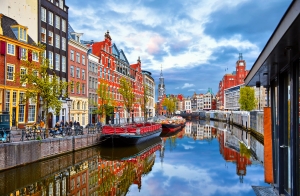
We have multiple Automotive clients in Netherlands who have steady demand for experienced and professional engineers.
We will shortest successful candidates and present them to our automotive clients in Netherlands. Successful candidates that get a job offer from the client will then have to be employed by our outsourcing partner, so we can legally place you on the client's site for terms of the contract.
Our local partner - a European professional employer organisation and compliance specialist that will become your official employer and will look after your salary payments and taxes.
After you receive a job offer from the client, we will put you in contact with our partner so you can sign the employment agreement with them and apply for a Work Permit.
You will be employed by our local partner but work for a client - the one that gave you a job offer.
Benefits of working in Netherlands
Our contracts are normally long-term starting from 12+ months, which will be renewed every 6 months following the Purchase Order pattern. This is a good steppingstone and a gate way for Non-European Candidates to start a career in Europe and progress to a European citizenship. This of course is subject to your compliance with immigration rules, and we of course will help you and mentor you through the process if that is your goal.
The good thing about the Netherlands is that you will be able to bring your wife and family, as you will get a good salary allowing you to provide good standards of living for your family.
Work Permit Process for Non-EU
Non-EU candidates may find it difficult to obtain a work visa for Europe. We work with a stablished local partner that has a solid reputation and relationships with local authorities across Europe, enabling visa sponsoring in Netherlands.
Our partner can apply for a visa for those coming from outside the EU. We have a fast-track process with the Dutch immigration service (IND) and can get a processed visa back in approx. 4 weeks.
In order to meet Labour Law requirements and obtain a Work Permit you will be employed by our partner while working on the customer. After we make an agreement with you and you get a job offer from the customer, we will put you in contact with our partner to sign an employment contact with them and apply for a Work Permit.
Dutch Citizenship
Expats who have been living in the Netherlands for five years are be eligible to apply for Dutch citizenship (Nederlandse nationaliteit).
There are some exceptions to the five-year residence requirement for naturalisation. You do not need to have lived in the Netherlands for a continuous five-year period if one of the following applies: you are married to a Dutch citizen and you have been living together continuously for at least three years either in the Netherlands or abroad. This exception is also possible for unmarried partners.
When gaining Dutch citizenship internationals often have to give up their original citizenship(s) (afstand doen) because in many cases the Netherlands does not permit dual nationality. There are, however, a number of exceptions to this rule, where dual citizenship is possible.
Work in Netherlands as an EU
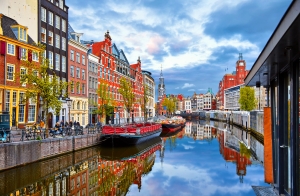
Inter-Consulting Europe (UK) Ltd is registered foreign company in Netherlands with no physical office in Netherlands and no full- time employees. In this case, when Inter-Consulting employees are EU nationals they are paid from UK to Netherlands.
In Netherlands you will have to pay the income tax on all your income received in Netherlands per each calendar year. Taxation in the Netherlands is based on a ‘box system’ whereby each box contains certain income which is taxed against a certain tax rate, with tax brackets, credits, allowances, fixed rates etc. Below you will find the most relevant rates for the current and previous years.
If you live in the Netherlands, you qualify as a resident taxpayer. If you live abroad and receive income from the Netherlands that is taxable in the Netherlands, you qualify as a non-resident taxpayer. In both cases, you will be subject to Dutch income tax.
Consultants are obliged to look after their Income Tax, Insurance and Social costs payments themselves and report proof of payments to Inter-Consulting.
Living in Germany

One of the most populous nations in Europe, Germany is home to roughly 82 million people. The country is a global political and economic leader, as well as a cultural centre. Germany's economy is one of world’s largest, with strong manufacturing, science, technology and trade sectors. A high quality of life makes Germany a desirable destination for many expats and other foreign travellers.
Housing
There are a variety of living options in Germany. On your first weeks before you have found a permanent housing you can book a hotel room for about 90 euros per night. If you are looking for something cheaper you can find a place in hostel for about 20 and 30 euros per night. You can also find a temporary flat (furnished) to rent for about 500 to 1,200 euros per month, depending on its location.
Apartment’s Search
When you begin to look for an apartment in Germany, we recommend you to seek the help of a real estate agent if you are not yet fluent in the German language. Rental agreements may sometimes be difficult to understand, and you may end up paying hidden costs.
If you want to plan your relocation on your own, you will find that most local newspapers — such as the Berliner Zeitung, the FAZ, or the Süddeutsche Zeitung — offer a section on housing in the region, as do websites such as immobilienscout24.de or immowelt.de (both websites in German only).
Flat/House Share
House and flat shares, called “Wohngemeinschaften”, or “WG”, in German, are good alternatives for people who want to save money on the rent. Usually in this kind of shared accommodation, each person has their own private room with the kitchen and bathroom to be shared. Bills including electricity, Internet and phone costs are normally shared too.
Living Costs’ break down:
- Monthly ticket public transport: 77 Euro
- Basic Lunch in Business District: 11 Euro
- Combo Meal in Fast Food Café: 7 Euro
- Basic Dinner for 2 people: 32 Euro
- 2 Movie Tickets: 21 Euro
- Beer in a pub (1 pint): 3,35 Euro
- Gym Membership (1 month): 43 Euro
Full guide on living costs in Germany
Opening a Bank Account
Documents required for opening a bank account in Germany:
- Your passport
- Your certificate of residency
- A pay statement from your employer (depending on the account type)
for some banks: your work permit
With these documents you can apply for a current and an EC card with the bank of your choice. Current accounts with some banks do not allow overdrafts. Some banks also require that a minimum amount be deposited each month. Make sure to clarify both of these questions before opening an account.
Healthcare and Insurance
To be an employee in Germany you must get a German Health Insurance, your home country insurance won’t be valid in Germany. About 85% of the German population is insured under the Gesetzliche Krankenversicherung (GKV), the German version of a national health system.
Employed persons making more than €4,687.50 monthly (€56,250 per year) have the option of either remaining in the statutory health insurance plan or taking out private insurance.
The statutory health insurance system includes the following benefits:
- outpatient medical treatment, for example in a physician’s office dental care medication;
- remedies and medical devices inpatient medical treatment, for example in a hospital medically necessary rehabilitation services during pregnancy and childbirth It also compensates persons for loss of income due to illness;
- If you have wife and kids, they can be also covered by your statutory health insurance policy at no extra charge.
Work in Germany non-EU

In Germany, the provision of temporary personnel is strictly regulated by the German Law on Labour Leasing Act (AÜG).
Non-EU Nationals can work in Germany for any company if they are employed by the Agency that hold the AUG License.
According to the Labour Leasing Act, the agency that holds the AUG License can act as an employer and supplies the temporary employees to companies in Germany.
Inter-Consulting has an agreement with an outsourcing partner - a German outsourcing agency that holds the AUG Licence. Via its outsourcing partner Inter-Consulting can employ Non-EU Nationals to work on the site of one of its automotive clients in Germany.
The employment process is quite straightforward. A non-EU consultant that is offered a job by IC will be employed and pay rolled by its outsourcing partner, while will be working for a client in Germany (for example BMW).
Payment process between IC, an outsourcing partner and a client:
- The outsourcing partner employs a consultant on a full payroll basis
- A client signs a contract with the outsourcing partner for the services provided by the consultant to the client
- The client pays the outsourcing partner for the consultant’s services, based on the timesheet provided
- The outsourcing partner deducts Income tax, Pension contribution, Social security from the consultant’s payment
- After the deduction of payments listed in section 4. the remaining amount will be paid to the consultant
- The outsourcing partner pays margin to IC, based on the agreed rate
Employment under AUG License expires in 18 months
Employment period under AUG License is limitied to 18 months, and after that period the consultant will have to decide whether he/she wants to return to home country or continue working in Germany. To continue working in Germany the consultant will have to find a full-time employment with a company that would sponsor him/her with Work Permit, which is quite likely for those who has established themselves well in the country during that 18-months period, which means put efforts to build relationships with the client, prove their value at work and gained at least a basic level of German language.
How Long would a Visa Application Process take?
This depends on the country, and sometimes on the embassy/consulate in the country, where the candidate will be applying. It can take up anywhere from six weeks to two to three months. Please note, that the candidate will also need to book an interview slot before going by the embassy or consulate, which will take an additional amount of time (we’ve had a waiting time for an interview of five months once).
Establish yourself in Germany as a Non-EU National
Coming under AUG License could be an effective solution for Non-EU Nationals who wish to start a career in Germany and establish themselves in Europe long-term. Germany offer good payment rates, living and working conditions, and will offer you a chance to enhance your expertise by working for leading German automotive manufacturers. On top of that, there is a strong and steady demand for experienced automotive engineers in the country, and if you are good at your job you will be getting job offers after 18 - month period and will have opportunities to progress in your career.
Getting Permanent Residence
Most foreign residents can apply for a permanent residence permit – a “settlement permit” (Niederlassungserlaubnis) – after five years. Some people may get it sooner: For example, if you are a non-EU national married to a German citizen you could file your application for a settlement permit after three years. If you have graduated from a German university and hold a temporary residence permit for paid employment, you can even submit your application after two years.
However, you need to fulfil various other conditions: You have to prove some basic knowledge of the German language, Germany’s political system, and German society. Moreover, you need to show that you are able to earn a living and that you have made financial contributions to Germany’s national pension plan for five years. Proof of accommodation is also required.
Work in Germany EU

Inter-Consulting Europe (UK) Ltd is registered foreign company in Germany with no physical office in Germany and no full- time employees. In this case, when Inter-Consulting employees are EU nationals they are paid from UK to Germany.
In Germany you will have to pay the income tax on all your income each calendar year. Working as a contractor you will be also responsible for paying your pension, health, nursing and unemployment insurances. At the end of one calendar year, you will need to submit an Income Tax Declaration to the Tax office. You can do it yourself of ask for a professional help.
Inter-Consulting will have the right to ask for a proof of consultant’s Tax payments, as we in return must report to a client that all payments have been made.
How Much Income Tax you pay?
In Germany, everyone’s earnings are subject to a basic tax allowance. Up to this amount, your taxable income is not subject to tax. In 2019, this basic tax allowance is 9,168 euros if you are unmarried and not in a civil partnership. For couples who are married or in a civil partnership is 18,336. If your taxable income is higher than these amounts, you will pay income tax on it. The taxation rates vary from 14 percent to 42 percent. The rule is: the higher your taxable income, the higher the rate of taxation. However, the top tax rate of 42 percent is only payable on incomes of more than 250,731 euros a year if you are unmarried and not in a civil partnership. For couples who are married or in a civil partnership, the maximum tax rate is applicable for incomes of over 501,462 euros.
To find our more information please check this website.
Living in Sweden
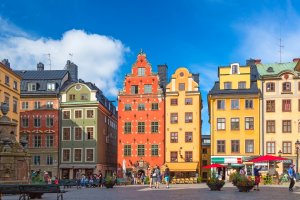
Sweden is a great place to live with its kind citizens, excellent public services and corporate culture that encourages people to have a good work-life balance.
Why Sweden in such an attractive place for work and living?
- 6 weeks paid Holidays!
- 480 Days Parental Leave
- Excellent Free Healthcare Services
Summer is Incredible
When you finish work at 5 you ‘ll have 5-6 hours of sun after work. That’s quality time for swimming, kayaking, walking, or picnicking (a national sport)
Green and Clean
All throughout Sweden the air is clean, there is tons of nature and the water is perfect for drinking and swimming.
Everything is functional and reliable
Swedes are obsessed with order. This means buses and trains will be on time (except when weather kicks in and all goes to hell) and most things will work the way they were planned hundreds of weeks ahead.
Work life is ridiculously comfortable
Jobs in Sweden seem designed to keep you as comfortable as possible. You will often see colleagues getting to work remotely with no questions asked or deciding their own vacation dates which is unheard of in most other parts of the world. Many companies allow their employees to leave after lunch on Fridays, others offer paid hours that employees can invest in wellbeing and fitness and at 5.05 PM offices look like ghost towns plus you will rarely hear from work on evenings or weekends. Bosses trust you and care about you and colleagues are often authentically interested in seeing you happy rather than competing against you. Few things can beat that.
It is unbelievably safe
Sweden comes as one of the safest places you can live on.
How about the Drawbacks? Okay, there are a few…but are they really that bad?
It really does get cold in winter
It gets dark very early and it does get very cold and snowy. The weather does not slow Swedish lifestyle, they are out and about all winter long: downhill ski, ice skate, play hockey, take walks, run, sled, drink coffee, and even put their babies outside to sleep in their carriages.
Taxes are high, but it pays off
Free Healthcare and Daycare, Free Education, Excellent Social Services and Benefits...just to name a few.
It can be tough to find a place to live
The waiting list to get a first-hand apartment contract (where you rent directly from the building owner rather than subletting from an existing tenant) in big cities can get pretty long.
Getting a personnummer is crucially important
Everyone in Sweden has a special government issued number called a personnummer. It is what allows you to apply for a bank account or a phone contract, and you will use it often – be it when you’re online paying bills or on the phone calling the tax office. The process is quite easy but it can also take some time, so it is worth putting it on the top of your to-do list when you arrive in Sweden.
Work in Sweden
Inter-Consulting Europe (UK) Ltd will only work with candidates who would fit into a Swedish culture and will appreciate the local amenities. This includes living locally. We prefer people who want to relocate to Sweden. We require employees to be enrolled into the Swedish Social System with a Person ID and a Full TAX ID to be granted and a Verification process to be applied. This is crucial, so all laws are obeyed. In turn, we must provide legal evidences to our Project Manager and to the client. Sweden has implemented Immigration and TAX Laws for both non-EU and EU nationals.
EU Nationals/British Nationals/US Nationals
EU Nationals are subject to Swedish Taxation if you are in the country for more than 3 months. If you are commuting on a weekly basis and work over 3 months you are a subject to Swedish taxation, as this is deemed as your main income and place of work. Sweden does not recognise 183 days’ rule anymore. Any British Nationals need to have Swedish AB on commencement of any contracts. The payments are only made in Sweden, not to any UK Ltd company. This is the only business process we operate for British contractors.
This Swedish government body investigates employees, who do not obey Swedish Tax rules: www.ekobrottsmyndigheten.se/en/
Taxation System in Sweden
If you are an employee paid from Inter-Consulting Europe (UK) Ltd we are obliged to pay all social tax fees: national insurance, pension, and other fees from your payroll.
According to Swedish supply chain law the employer is responsible for social contribution payments of its employees. If an employee avoids paying taxes Swedish tax authorities will demand this amount from the end customer. Therefore, the customer requires from us to provide evidences of your payments.
Level of English
Your English MUST BE FLUENT with the advanced level in all areas: speaking, writing, listening. This will be assessed on a telephone interview. If your English level does not meet the requirements we will not progress with your application.
Register in Sweden
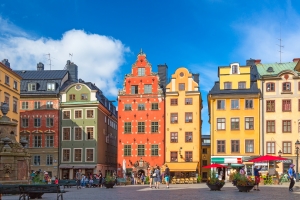
These are the steps you should follow to register in Sweden:
Documents to bring with you (for single status people):
1. You will need to have a full passport to obtain a temporary bank account until you get your Swedish Person ID. EU national ID card is not any good.
2. Documents showing your civil status, e.g. marriage certificate (as unmarried you do not need to show your civil status).
3. Birth certificate, if you have children.
4. Documents showing that you are employed and working or will be working in Sweden.
5. Pay slips (If you have already begun your period of employment you can also bring pay slips.)
6. Present your Employment Certificate (If you are working in Sweden you will be required to present an employment certificate (anställningsbevis) from your employer, specifying that you will be performing work in Sweden).
If you are moving with a family:
When you visit the office all members of your family who are moving to Sweden must accompany you, including the children. You and your family members need to bring the above documents when you visit one of Swedish Tax Agency offices.
We are now only relocating families where the consultant have a Swedish Investor Work Permit. It is too expensive to live with a family in Sweden with the housing costs.
We prefer only EU nationals or international applicants with a dual EU citizenship. For example, you have a Brazilian and Italian passport. The director will shortlist international applicants that he feels suitable for the job.
Visit Swedish Tax Agency
When you visit Swedish Tax Agency you will be given a co-ordination number.
- This number must always be used in contact with the Swedish Tax Agency.
- The purpose of the coordination number is for authorities and other social organisations to identify people even if they are not in the Swedish Population Register.
- You can use a coordination number when contacting different authorities, healthcare centres and banks.
IMPORTANT: A coordination number is not the same as a Personal Identity number. A Personal Identity number can only be obtained if you plan to stay in Sweden for longer than one year.
The Agency will explain to you that in order to apply for a Personal Identity Number you will need to prove that you actually work and intent to stay long-term in Sweden. A proof for that would be your payslips, so you will need to begin your work first and get your payslips in irder to get a Personal Identity Number.
You will need to come back to Swedish Tax Agency when you get your payslips and a co-ordination number, so they will register you in the Swedish Population Register.
Once you get registered in Swedish Population Register you will be issued a Swedish Personal Identity Number (personnummer).
What is a Swedish Person Identity Number and why you need it?
Everybody entered into the Swedish Population Register is given a personal identity number, which is unique for that person. A personal identity number is provided by the Swedish Tax Agency. A coordination number is a unique designation of a person's identity that is not, or has not been, registered in Sweden.
f you have been given a personal identity number, you will keep the same number for your whole life. This means that your personal identity number is not changed if you move abroad, for example.
Your personal identity number is used in contact with authorities and private companies, since the number is your identity designation in Sweden.
The Swedish Tax Agency is commissioned by the government to provide current, accurate information about people who live in Sweden so that other authorities have a basis for planning and decisions. This is done by the Population Register department, which passes on your information to other authorities. They will receive correct information about you when changes are made to the Population Register, such as your new address after you report a move.
Income Tax and Social Contribution
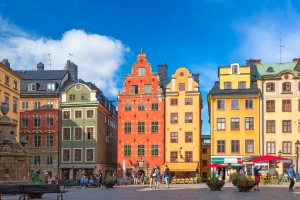
Inter-Consulting Europe (UK) Ltd is registered foreign company in Sweden with no physical office in Sweden and no full- time employees who are Swedish nationals.
Our Company registration number in Sweden is 502072-7219
In this case, when Inter-Consulting employees are EU nationals they are paid from UK to Sweden.
How much Tax and Social Contribution to pay?
Attention: If you are a non-Swedish but an expat EU consultant you have 45 days where you can live in Sweden Tax free without being registered. After 45 days you will need to go to the Swedish Tax Office - Skatteverket and apply for a Person Number. From that moment you will get into the Swedish Tax register and will be responsible for paying Income Tax and Social Contribution in Sweden.
Please follow the above link as for the documents you will need, your passport or your ID card and also you must a permanent place address to live in Sweden because your documents will be posted at this given address.
After 45 days while being an employee paid from Inter-Consulting Europe (UK) Ltd and work in Sweden you will have to pay:
1.) Social Contribution Payment
Important: Inter-Consulting has no permanent establishment in Sweden, which means that Inter-Consulting will payroll workers in Sweden.
Inter-Consulting reports this social security contribution and this income tax to the tax office on a monthly basis.
2.) Income Tax in Sweden (on your Swedish salary)
- The amount of tax you pay will depend on your salary (an average 31%).
Here you can find out how to submit your Tax return online: Income Tax Sweden.
Here is the link where you can check how much Income Tax you have to pay in Sweden: Income Tax Calculator.
Important: All employees will have to provide a declaration about social security contribution and prove of payment on a montly basis. If this is not shown, Inter-Consutling is obliged to hold back salary payments.