
Sweden is facing a growing shortage of engineers and technical professionals, creating strong opportunities for qualified candidates. With demand expected to exceed supply through 2028, companies across the country are actively seeking skilled talent—both locally and internationally.
Where the Demand Is Highest
Tech & IT
Sweden’s digital economy is expanding rapidly, with a projected shortage of around 18,000 tech professionals each year. Software developers, IT architects, and cybersecurity specialists are especially in demand.
Engineering Roles
There is consistent demand for engineers across multiple disciplines, including mechanical, electrical, chemical, and mining engineering.
Construction & Manufacturing
Companies are also looking for building services engineers and technical specialists to support infrastructure and industrial projects.
Why There’s a Talent Shortage
- Aging workforce – Many experienced professionals are reaching retirement age
- Skills gap – Not enough graduates to meet industry needs
- Location challenges – Fewer candidates are willing to relocate to northern Sweden, where many large projects are based
What This Means for Candidates
- Competitive salaries, especially in IT and specialized engineering
- Strong job prospects across multiple industries
- Opportunities for international candidates, with many employers open to hiring from abroad
What Employers Are Doing
- Hiring internationally to fill critical roles
- Offering higher salaries and benefits to attract talent
- Expanding teams through global and offshore solutions
- Supporting work permits via initiatives like the EU Blue Card
Important to Know
While demand is high, some roles—especially outside international tech companies—require Swedish language skills. However, many global companies operate in English and actively welcome international professionals.
A Changing Threat – An Adaptable Solution
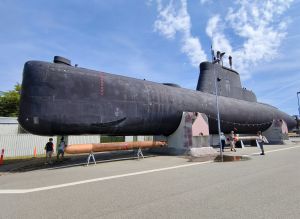
The world beneath the oceans is evolving just as rapidly as the one above. Advances in technology, shifting geopolitical dynamics, and new access routes—particularly in the Arctic—are redefining what is possible below the surface. Capabilities once considered unattainable are now not only feasible but essential. As artificial intelligence accelerates decision-making and autonomous systems expand operational reach, the underwater domain is becoming a critical frontier for both opportunity and risk.
For modern states, safeguarding the future means more than traditional defense. It requires protecting critical national infrastructure, securing vital shipping lanes, and maintaining control over the seabed environment. These demands call for highly capable, flexible, and enduring underwater assets—systems that can operate farther, longer, and with greater adaptability than ever before.
At the forefront of meeting these challenges is Saab, whose approach to submarine and underwater technology is rooted in continuous evolution. Rather than designing platforms that risk becoming obsolete, Saab embraces a modular philosophy—one that allows systems to grow, adapt, and remain relevant as threats and missions evolve.
An Evolutionary Approach to Underwater Superiority
For more than a century, Saab has been a pioneer in submarine innovation. Its legacy includes milestones that have shaped modern naval engineering—from the introduction of fully welded submarine hulls in the 1930s to the development of the X-form rudder in the 1960s. In the decades that followed, Saab helped revolutionize air-independent propulsion, dramatically extending underwater endurance.
Today, Saab continues to lead with fully digitized submarines capable of integrating into complex “system-of-systems” environments. These platforms can seamlessly operate alongside uncrewed underwater vehicles (UUVs), enabling coordinated missions that enhance surveillance, defense, and operational flexibility.
Central to this capability is Saab’s modular design philosophy. Submarines are built with adaptability in mind, allowing for straightforward upgrades and retrofits throughout their lifecycle. This ensures that each vessel can evolve in step with emerging technologies and shifting operational demands—remaining effective not just at launch, but for decades to come.
A Legacy of Innovation Across Generations
Saab’s expertise is reflected in its development of more than 20 submarine classes over the past century. Beginning with early designs in the early 20th century, each generation has introduced new technologies and refined operational capabilities.
From improved hull shapes that enhance hydrodynamics and stealth, to advanced propulsion systems that extend submerged endurance, Saab’s submarines have consistently pushed the boundaries of underwater performance. Innovations such as stealth-enhancing coatings, advanced maneuverability systems, and record-setting weapons capabilities demonstrate a commitment to both technological excellence and operational effectiveness.
Modern Saab submarines continue this tradition, with built-in capacity for mid-life upgrades that keep them at the cutting edge of performance long after deployment.
Meeting Diverse Operational Needs
Saab’s submarine portfolio is designed to address a wide range of naval requirements, divided into two primary segments:
- Oceanic Submarines: These form the backbone of Saab’s offering, combining over a century of expertise with forward-looking design. They are optimized for versatility, stealth, and sustained operations in complex maritime environments.
- Expeditionary Submarines: Built for extended missions and long-distance deployments, these larger platforms support greater crew capacity and increased payloads. They are ideal for navies operating far from home waters, requiring endurance and strategic reach.
Complementing these manned platforms is Saab’s Autonomous Ocean Drone, a large uncrewed underwater vehicle (LUUV). Drawing on Saab’s deep heritage in submarine technology, this system represents the next step in underwater operations—delivering rapid adaptability in an environment where change is constant.
Prepared for an Uncertain Future
As the underwater domain becomes increasingly contested, adaptability is no longer optional—it is essential. Saab’s evolutionary approach ensures that its submarines and underwater systems are not only capable today but ready for tomorrow’s challenges.
In a world where tides shift quickly and threats evolve even faster, the ability to adapt is the ultimate advantage.