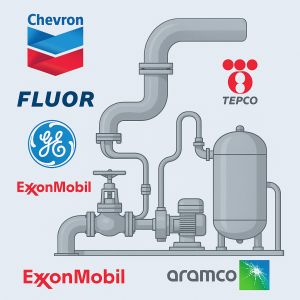
In modern industrial facilities, piping networks are the lifelines that transport fluids, gases, and steam essential for operations. But behind every well-functioning piping system is an often-overlooked discipline: pipe stress analysis. Stress analysis tools aren’t just about checking boxes—they’re essential for ensuring safety, reliability, and long-term cost efficiency.
Preventing Catastrophic Failures
A single piping failure can shut down an entire facility. For example, in 2012, Chevron’s Richmond refinery in California suffered a catastrophic pipe rupture due to corrosion and inadequate stress management. The incident caused massive fires, exposed thousands of people to harmful chemicals, and cost Chevron over $2 billion in settlements and upgrades. Proper stress analysis could have flagged vulnerabilities in the piping system long before failure.
Stress analysis software like CAESAR II or AutoPIPE simulates real-world operating conditions—pressure, vibration, thermal expansion, and seismic loads—to identify risks early. By doing so, companies avoid disasters that threaten human lives, the environment, and corporate reputation.
Ensuring Regulatory Compliance
Regulatory codes such as ASME B31.3 (Process Piping) and ASME B31.1 (Power Piping) mandate stress analysis. Skipping it isn’t just unsafe—it’s illegal. For example, Fluor Corporation, one of the largest engineering and construction firms, integrates stress analysis into all its oil & gas and power projects to guarantee code compliance. This prevents costly redesigns, failed inspections, and project delays.
Accommodating Thermal Expansion
In industries like power generation, steam lines can reach extreme temperatures. General Electric (GE), when designing piping systems for its steam turbines, uses stress analysis to account for expansion and contraction that occurs with temperature swings. Expansion loops, bellows, and flexible joints are engineered into the design to prevent buckling or cracking. Without this, pipes could literally tear themselves apart during operation.
Optimizing Pipe Support Design
Improperly supported piping can sag, vibrate excessively, or overload connections. ExxonMobil, in its petrochemical plants, relies on advanced stress analysis to determine the optimal placement of supports like spring hangers and anchors. This ensures that loads are distributed evenly, reducing maintenance costs and preventing unplanned shutdowns.
Balancing Flexibility and Rigidity
Piping must be flexible enough to move under stress but rigid enough to withstand wind, seismic activity, and vibration. After the 2011 Fukushima earthquake in Japan, utilities such as Tokyo Electric Power Company (TEPCO) invested heavily in advanced stress analysis for nuclear plant piping to ensure seismic resilience. This balance between flexibility and rigidity is critical in earthquake-prone regions.
Protecting Connected Equipment
Piping systems often terminate at sensitive equipment such as pumps, compressors, or reactors. If the pipe loads exceed equipment design limits, nozzles can crack or equipment can fail prematurely. Shell, in its deepwater oil projects, uses stress analysis to minimize nozzle loads on subsea equipment. This ensures reliability in harsh offshore environments where equipment replacement is extremely costly and time-consuming.
Reducing Costs and Downtime
Every hour of unplanned downtime can cost millions in industries like petrochemicals and LNG. Stress analysis helps companies like Saudi Aramco optimize their piping layouts early in design, avoiding expensive retrofits later. By preventing mid-project changes or emergency shutdowns, they save significantly on operating costs and improve overall plant uptime.
How Stress Tools Deliver These Results
Modern software such as CAESAR II, AutoPIPE, and ROHR2 follows a standard workflow:
Data Gathering – Define geometry, materials, fluids, and operating conditions.
Modeling – Create a digital representation of the piping system.
Load Cases – Simulate sustained, thermal, and occasional loads (like wind or seismic).
Analysis – Calculate stresses, forces, and displacements, comparing results to code limits.
Optimization – Adjust layout, supports, or flexibility until compliance is achieved.
Documentation – Generate reports proving system safety and code compliance.
Piping failures are not just technical issues—they can become billion-dollar disasters. By adopting stress analysis tools, companies like Chevron, ExxonMobil, GE, Shell, and Aramco have learned (sometimes the hard way) that rigorous analysis pays off in safety, compliance, and long-term savings.
In short, pipe stress analysis is not optional—it’s essential.